This children’s article, The Hubble Space Telescope: A window into the universe, has been written for native English speakers and learners of English as a second or foreign language. It can help children practise reading and comprehension, learn useful vocabulary, and explore one of the most important scientific instruments ever built. Written by Mark Pulley, a teacher and writer who creates fun and informative news articles for English learners.
What is a telescope?
A telescope is a tool that helps people see objects that are very far away. On Earth, telescopes can be used to observe mountains, ships or distant landscapes. Astronomers use special telescopes to study stars, planets, galaxies and other objects in space.
The larger a telescope is, the more light it can collect. This allows scientists to see fainter and more distant objects. For hundreds of years, telescopes have helped people learn more about the universe and our place within it.
The story of the Hubble Space Telescope
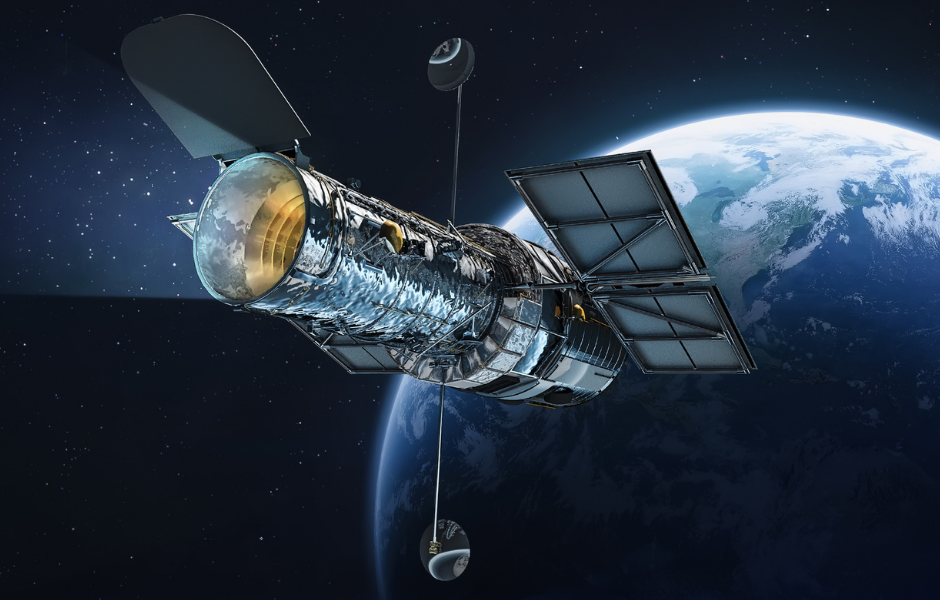
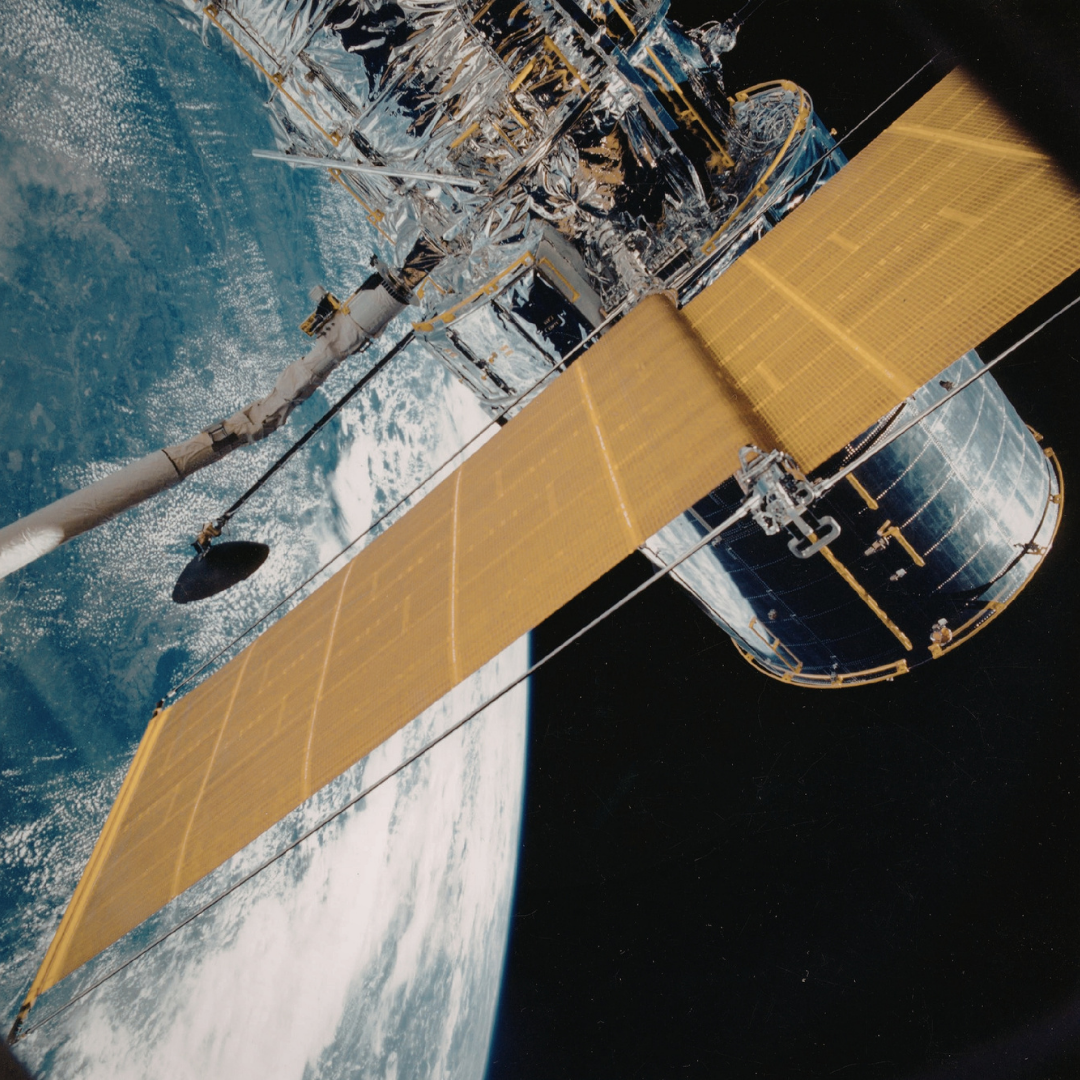
The Hubble Space Telescope was launched into space in 1990. It was named after Edwin Hubble, an astronomer who helped show that the universe is much larger than people once believed.
Unlike most telescopes, Hubble orbits Earth high above the atmosphere. This is important because Earth’s atmosphere can blur the view of distant objects. From space, Hubble can take much clearer pictures.
Soon after its launch, scientists discovered a problem with one of Hubble’s mirrors. Engineers and astronauts worked together to fix the telescope during a space mission in 1993. After that repair, Hubble began sending back some of the most amazing images ever seen.
Why is Hubble so special?
Hubble has photographed giant clouds of gas where stars are born, colourful nebulae, distant galaxies and planets within our own Solar System. Some of its images have become famous around the world.
The telescope has helped scientists estimate the age of the universe, study black holes and learn more about how galaxies form and change over time. Before Hubble, many of these discoveries would have been much more difficult.
One of Hubble’s greatest achievements is showing us objects billions of light-years away. When Hubble looks at very distant galaxies, it is also looking back in time because the light has taken billions of years to reach us.
What comes next?
Although Hubble is more than 35 years old, it is still working and continues to make discoveries. Scientists hope it can remain in operation for several more years.
Newer telescopes, such as the James Webb Space Telescope, are now helping astronomers explore the universe in different ways. Rather than replacing Hubble completely, these telescopes often work together.
The future of space exploration looks exciting. As technology improves, scientists hope to build even more powerful telescopes that can search for distant planets, study the first stars and perhaps answer some of the universe’s biggest mysteries.
For advanced readers who would like to learn more, NASA provides detailed information about the Hubble Space Telescope and its discoveries.
Article vocabulary list
- Telescope: A tool used to observe distant objects.
- Astronomer: A scientist who studies space and the universe.
- Atmosphere: The layer of gases surrounding a planet.
- Galaxy: A huge collection of stars, gas and dust held together by gravity.
- Nebula: A giant cloud of gas and dust in space.
- Orbit: The path an object follows around another object in space.
- Universe: Everything that exists, including all stars, planets and galaxies.
- Discovery: Something learned or found for the first time.
Comprehension questions
Just click the plus (+) to see the answer
1. Which newer telescope now works alongside Hubble?
a) Voyager Telescope
b) Apollo Telescope
c) James Webb Space Telescope
Answer: c) James Webb Space Telescope
2. When was the Hubble Space Telescope launched?
a) 1980
b) 1990
c) 2000
Answer: b) 1990
3. Why is Hubble located in space?
a) To avoid Earth’s atmosphere blurring its view
b) To get closer to the Moon
c) To save electricity
Answer: a) To avoid Earth’s atmosphere blurring its view
4. What problem did Hubble have after launch?
a) It ran out of fuel
b) It lost contact with Earth
c) One of its mirrors had a flaw
Answer: c) One of its mirrors had a flaw
5. What has Hubble helped scientists learn?
a) How to build aeroplanes
b) The age of the universe
c) How volcanoes form
Answer: b) The age of the universe

Mark is a writer and EFL teacher from England with eight years’ experience. He’s passionate about travel, sport (especially football), animals, nature, and history, and enjoys helping children explore the world through language and learning.