This children’s article, Lightning explained: Nature’s spectacular light show, has been written for native English speakers and learners of English as a second or foreign language. It can help children practise reading and comprehension, learn useful vocabulary, and discover how lightning forms, why it is so powerful, and how to stay safe during a thunderstorm. Written by Mark Pulley, a teacher and writer who creates fun and informative news articles for English learners.
What is lightning?
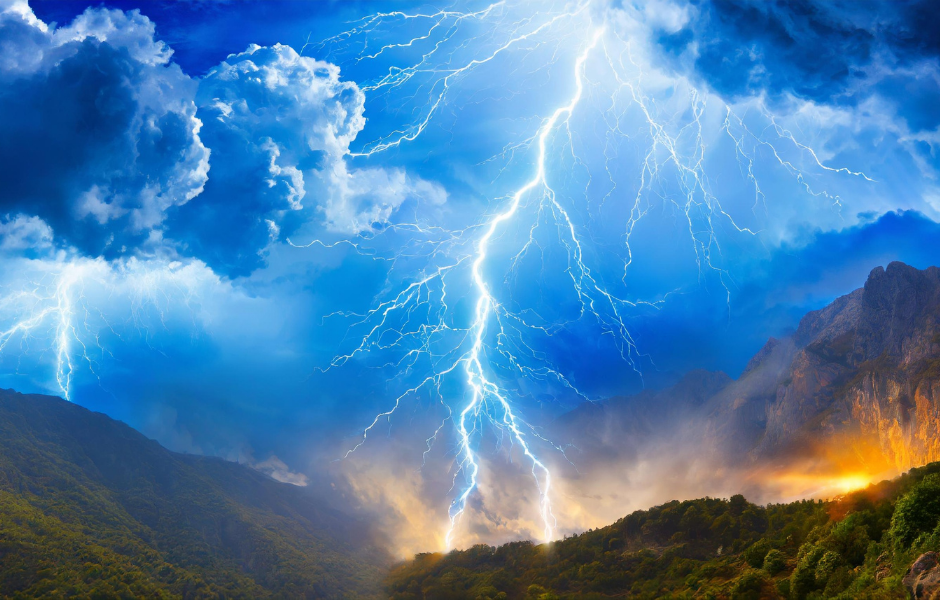
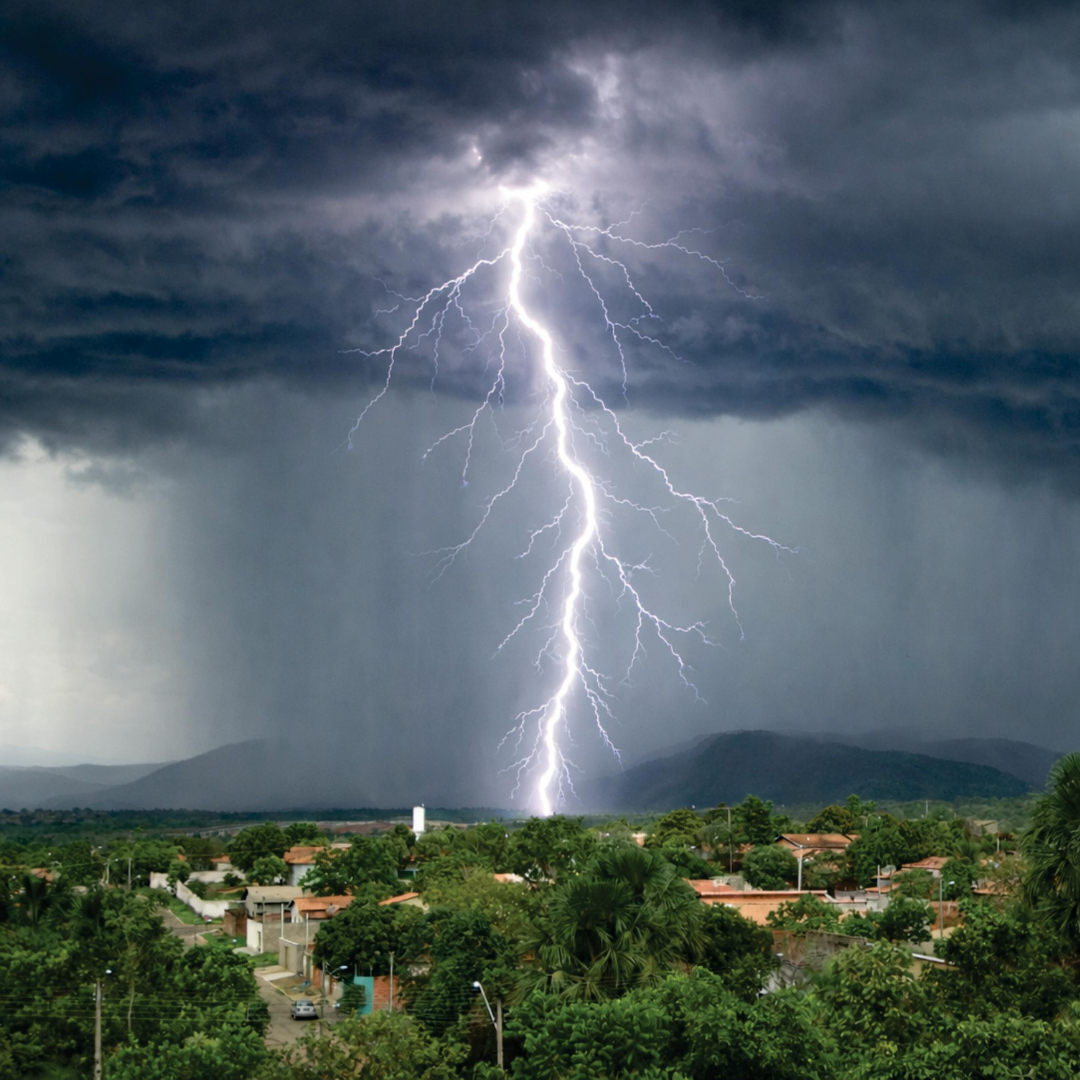
Have you ever counted the seconds between a flash of lightning and a loud clap of thunder? Lightning is one of nature’s most exciting sights. It is a giant spark of electricity that jumps between clouds or between a cloud and the ground during a thunderstorm.
Long ago, people did not understand what caused lightning. Many believed it came from powerful gods. In ancient Greece, people thought Zeus threw lightning bolts from the sky. The Vikings believed the thunder god Thor created lightning as he swung his mighty hammer. Other cultures had their own stories too, showing how mysterious lightning once seemed.
Today, scientists know that lightning happens when tiny ice crystals and water droplets bump into each other inside storm clouds. This builds up an electrical charge until a huge spark shoots through the air.
Amazing facts about lightning
Lightning is much more powerful than most people imagine. A single bolt can heat the air to about 30,000°C, which is around five times hotter than the surface of the Sun. That sudden burst of heat makes the air expand very quickly, creating the loud sound we call thunder.
Some lightning bolts are only a few kilometres long, while others can stretch for more than 100 kilometres across the sky. Around the world, lightning strikes about 100 times every second, meaning there are millions of lightning flashes every day. It’s also responsible for starting many widfires around the world each year.
Lightning can also strike the same place many times. The Empire State Building in New York City is hit dozens of times each year, but special lightning rods help protect the building.
Is lightning dangerous?
Although being struck by lightning is very rare, it can be extremely dangerous. People are more likely to be struck if they are standing in open fields, swimming, fishing, playing sports or sheltering under a tall tree during a thunderstorm.
A lightning strike can cause serious burns, stop a person’s heart or damage their nervous system. Fortunately, many people survive after receiving quick medical treatment, but it is always much safer to avoid the danger in the first place.
The safest place to be during a thunderstorm is inside a strong building or a car with the windows closed. If you hear thunder, it is a good idea to go indoors straight away because if you can hear thunder, you are close enough to be struck.
How can you stay safe?
Most thunderstorms pass quite quickly, so the safest thing to do is wait indoors until the storm has moved away. Avoid standing under trees, using umbrellas in open spaces or staying in water until at least 30 minutes after the last clap of thunder.
If you are caught outside with nowhere to shelter, try to move to lower ground and stay away from tall objects such as trees, lamp posts and metal fences. Never lie flat on the ground. Instead, crouch down with your feet together to make yourself as small a target as possible.
Lightning may look frightening, but it is also one of the most fascinating parts of nature. Thanks to science, we now understand how it forms and how simple safety rules can help keep us safe during a storm.
Article vocabulary list
- Lightning: A giant spark of electricity in the atmosphere.
- Thunderstorm: A storm with thunder, lightning and often heavy rain.
- Electrical charge: A build-up of electricity.
- Atmosphere: The layer of gases surrounding Earth.
- Nervous system: The body’s network of nerves that carries messages to and from the brain.
- Shelter: A safe place that protects you from danger or bad weather.
- Thunder: The loud sound made after a flash of lightning.
- Crouch: To bend down low while keeping your feet on the ground.
Comprehension questions
Just click the plus (+) to see the answer
1. What is lightning?
a) A giant spark of electricity.
b) A type of cloud.
c) A strong wind.
Answer: a) A giant spark of electricity.
2. Which Greek god was believed to throw lightning bolts?
a) Apollo
b) Zeus
c) Poseidon
Answer: b) Zeus
3. About how hot can a lightning bolt make the air?
a) 3,000°C
b) 10,000°C
c) 30,000°C
Answer: c) 30,000°C
4. Where is it safest to be during a thunderstorm?
a) Under a tall tree.
b) Inside a strong building or a car.
c) In an open field.
Answer: b) Inside a strong building or a car.
5. Which famous New York building is struck by lightning many times each year?
a) The White House.
b) The Empire State Building.
c) The Statue of Liberty.
Answer: b) The Empire State Building.

Mark is a writer and EFL teacher from England with eight years’ experience. He’s passionate about travel, sport (especially football), animals, nature, and history, and enjoys helping children explore the world through language and learning.