
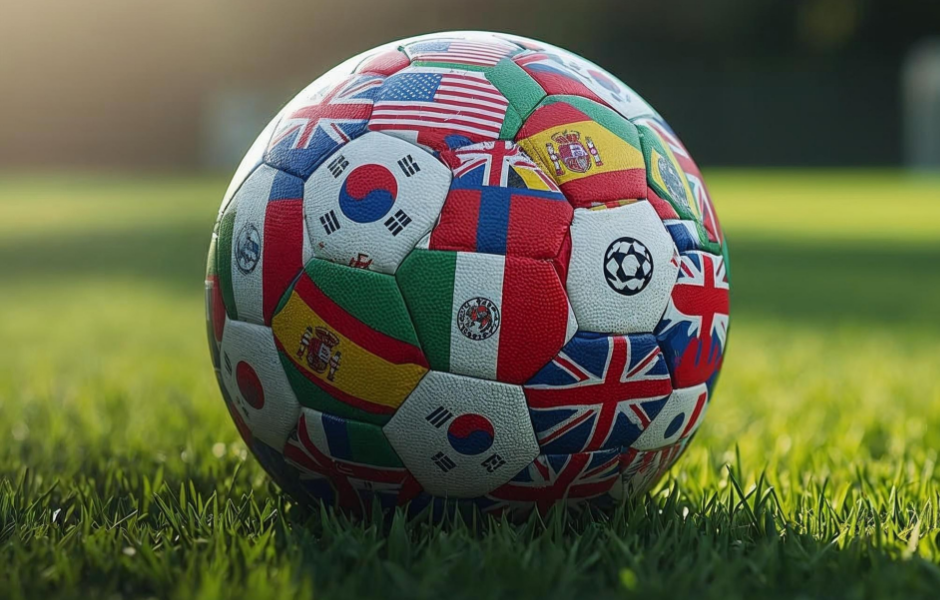
This children’s article, The FIFA World Cup explained for kids, has been written for native English speakers and learners of English as a second or foreign language. It can help children practise reading and comprehension, learn useful vocabulary, and explore the biggest football tournament on Earth. Written by Mark Pulley, a teacher and writer who creates fun and informative news articles for English learners.
What is the FIFA World Cup?
The FIFA World Cup is the biggest and most popular football tournament in the world. It brings together the best national teams from across the globe to compete for one of sport’s most famous trophies.
The tournament takes place every four years and is watched by billions of people. For many fans, it is the most exciting event in sport. Countries stop to cheer on their teams, and children often dream of one day playing on football’s biggest stage.
Teams must first qualify through regional competitions. Only the strongest nations earn a place at the finals, making the tournament a celebration of the world’s best footballers.
A history of football’s greatest tournament
The first FIFA World Cup was held in 1930 in Uruguay. Only 13 teams took part, and Uruguay became the first champions.
Since then, the competition has grown into a global event. Legendary players such as Pelé, Diego Maradona and Lionel Messi have all helped create unforgettable World Cup moments.
Brazil has won the tournament five times, more than any other nation. Other successful teams include Germany, Italy and Argentina.
The 2026 World Cup
The 2026 FIFA World Cup will be hosted by three countries: Canada, Mexico and the United States. It is scheduled to begin on 11 June 2026 and finish with the final on 19 July 2026.
This will be the largest World Cup ever, with 48 teams competing instead of 32. Matches will be played in famous stadiums across North America, giving millions of fans the chance to watch the action live.
Players will face some unusual challenges. Several host cities can become very hot during the summer, while matches in Mexico City will be played at high altitude. The thinner air can make running and recovering more difficult.
Who could win and what should fans look out for?
Many football experts believe Spain will be one of the favourites. Their talented young players and strong teamwork have impressed fans in recent years.
However, winning the World Cup is never easy. France, defending champions Argentina and England are also expected to challenge for the trophy. Several other nations could surprise people too.
One of the joys of the World Cup is that nobody knows exactly what will happen. New stars often appear, underdogs sometimes defeat famous teams, and football fans around the world share in the excitement together.
For advanced readers who would like to learn more, FIFA provides information about the tournament on its official website.

Article vocabulary list
- Tournament: A competition involving many teams or players.
- National team: A sports team representing a country.
- Qualify: To earn the right to take part in a competition.
- Champion: The winner of a competition.
- Altitude: The height of a place above sea level.
- Stadium: A large venue where sports events are held.
- Favourite: A team or player expected to win.
- Underdog: A team or player not expected to win.
Comprehension questions
Just click the plus (+) to see the answer
1. How often is the FIFA World Cup held?
a) Every four years
b) Every two years
c) Every year
Answer: a) Every four years
2. Where was the first World Cup held?
a) Brazil
b) Uruguay
c) Spain
Answer: b) Uruguay
3. Which country has won the most World Cups?
a) Brazil
b) Germany
c) Argentina
Answer: a) Brazil
4. How many countries are hosting the 2026 World Cup?
a) Two
b) Four
c) Three
Answer: c) Three
5. What challenge will teams face in Mexico City?
a) Snow
b) High altitude
c) Heavy rain
b) High altitude

Mark is a writer and EFL teacher from England with eight years’ experience. He’s passionate about travel, sport (especially football), animals, nature, and history, and enjoys helping children explore the world through language and learning.