This children’s article, Triceratops: a kids’ guide to the famous three-horned dinosaur, has been written for native English speakers and learners of English as a second or foreign language. It can help children build vocabulary, learn about dinosaurs, and understand how scientists study animals from the distant past. Written by Mark Pulley, a teacher and writer who creates fun and informative news articles for English learners.
A dinosaur with three horns
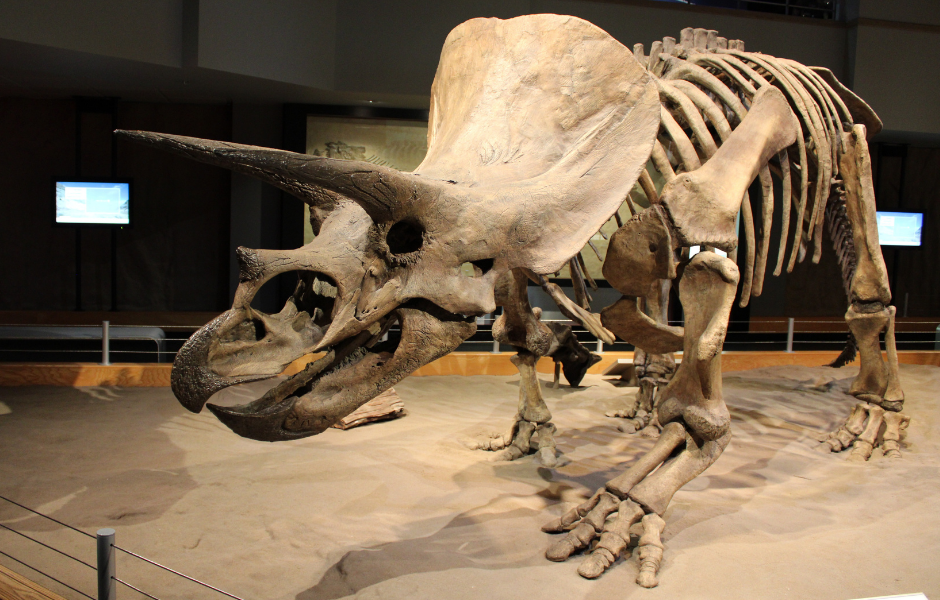
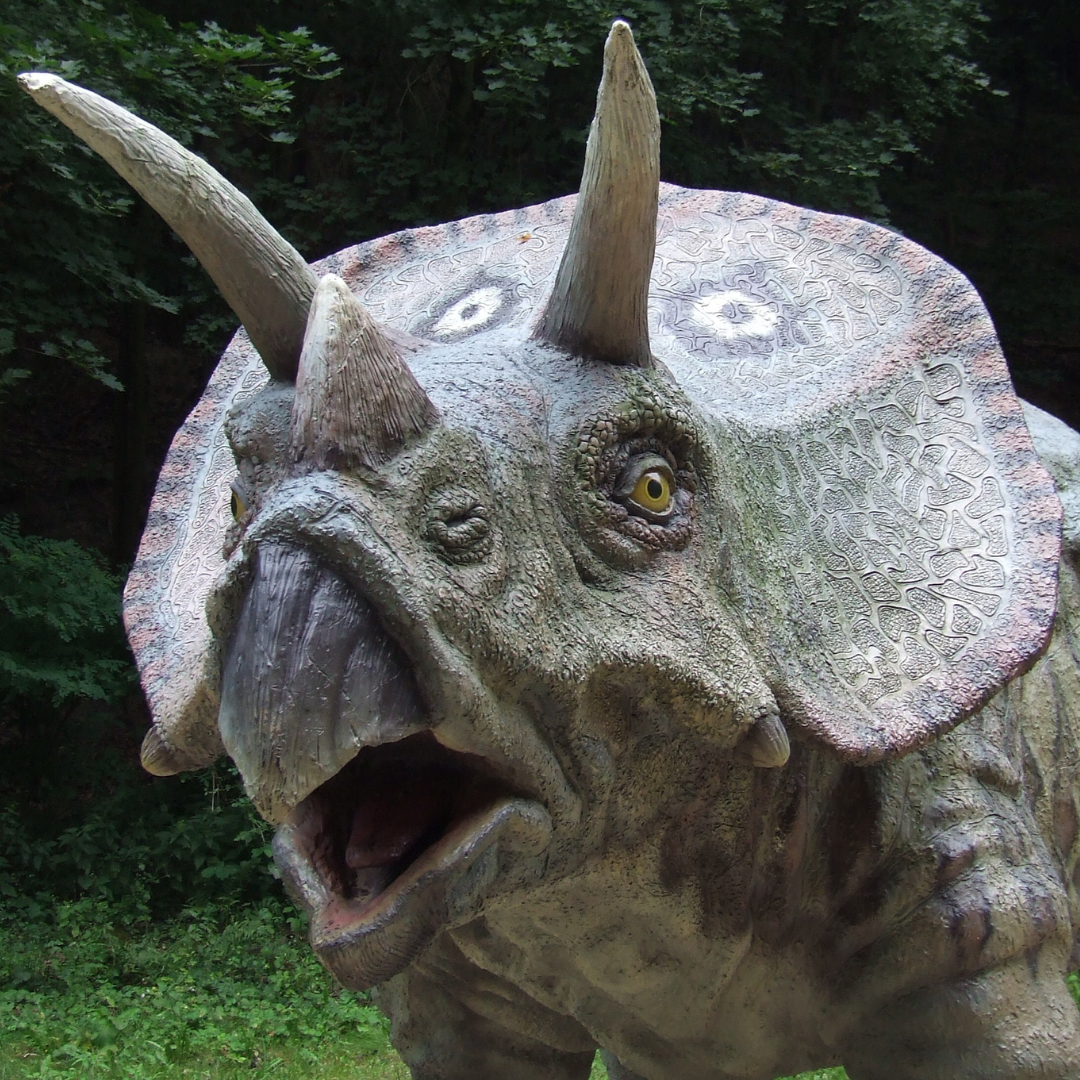
One of the most recognisable dinosaurs is the mighty Triceratops. Its name means “three-horned face”, which describes its most famous features: two long horns above its eyes and a smaller one on its nose. It also had a large bony frill at the back of its head.
Triceratops lived around 68 to 66 million years ago, during the late Cretaceous period. At that time, North America, where they mostly lived, was full of forests, rivers and many different types of dinosaurs.
Triceratops was one of the last dinosaurs to live on Earth before the mass extinction about 66 million years ago, when a huge asteroid is thought to have hit the planet, dramatically changing the climate.
A powerful plant-eater
Unlike predators, Triceratops was a plant-eating dinosaur. Scientists believe it used its strong beak to bite plants and its powerful teeth to chew tough leaves and branches.
The dinosaur could grow up to 9 metres long and weigh about 6 to 12 tonnes, which is roughly the weight of two elephants. Its huge skull, which included the horns and frill, could grow more than 2 metres long.
Those horns were probably useful for defence. During the late Cretaceous period, dangerous predators lived in the same environment, including the famous Tyrannosaurus Rex. The horns probably helped Triceratops protect itself from attacks.
Some scientists also think the horns and frill may have been used in fights between Triceratops, just as many modern-day animals do today.
Did Triceratops live alone?
Scientists are still learning about how Triceratops lived. Some discoveries suggest these dinosaurs may have lived alone or in small groups. Unlike some other plant-eating dinosaurs, there is no strong evidence that they travelled in huge herds.
Like other dinosaurs, Triceratops reproduced by laying eggs. Scientists believe a female probably laid a clutch of eggs in a nest, although the exact number is not known. The baby dinosaurs would have hatched and then grown quickly.
Young Triceratops probably looked a little different from adults. Their horns and frills were smaller, and these features likely grew larger as the dinosaur matured.
Fun facts about Triceratops
Here are some interesting facts about this famous dinosaur:
- The name Triceratops means “three-horned face.”
- Its skull is one of the largest skulls of any land animal ever discovered.
- The frill at the back of its head may have helped protect its neck.
- Triceratops lived at the same time as T. rex.
- Some Triceratops fossils show injuries on the horns, which may have come from fights with other dinosaurs.
- Its beak was similar to the beak of a modern parrot, but much bigger.
- The first Triceratops fossils were discovered in the late 1800s.
- Hundreds of fossils have been found, making it one of the best-known dinosaurs.
Article vocabulary list
- Cretaceous – The geological period when many famous dinosaurs lived, ending about 66 million years ago.
- Extinction – When a species completely dies out and no living members remain.
- Predator – An animal that hunts and eats other animals.
- Fossil – The preserved remains or traces of ancient plants or animals in rock.
- Frill – A large bony plate at the back of the Triceratops head.
- Clutch – A group of eggs laid by an animal at one time.
Comprehension questions
Just click the plus (+) to see the answer
1. What does the name Triceratops mean?
A) Giant lizard
B) Three-horned face
C) King of the dinosaurs
Answer: B) Three-horned face
2. When did Triceratops live?
A) Around 68 million years ago
B) Around 200 million years ago
C) Around 12 million years ago
Answer: A) Around 68 million years ago
3. What did Triceratops mainly eat?
A) Fish
B) Other dinosaurs
C) Plants
Answer: C) Plants
4. Which famous predator lived at the same time as Triceratops?
A) Velociraptor
B) Tyrannosaurus rex
C) Stegosaurus
Answer: B) Tyrannosaurus rex
5. Why might Triceratops have used its horns?
A) For flying
B) For defence and fighting other dinosaurs
C) For swimming
Answer: B) For defence and fighting other dinosaurs

Mark is a writer and EFL teacher from England with eight years’ experience. He’s passionate about travel, sport (especially football), animals, nature, and history, and enjoys helping children explore the world through language and learning.