This children’s article, The Alhambra: Spain’s medieval hilltop palace built for beauty and defence, has been written for native English speakers and learners of English as a second or foreign language. It can help children practise reading and comprehension, learn useful history and geography vocabulary, and imagine what it might feel like to walk through one of Spain’s most famous historic buildings. Written by Sinead O’Carroll, an experienced teacher and writer.
A palace on a hill
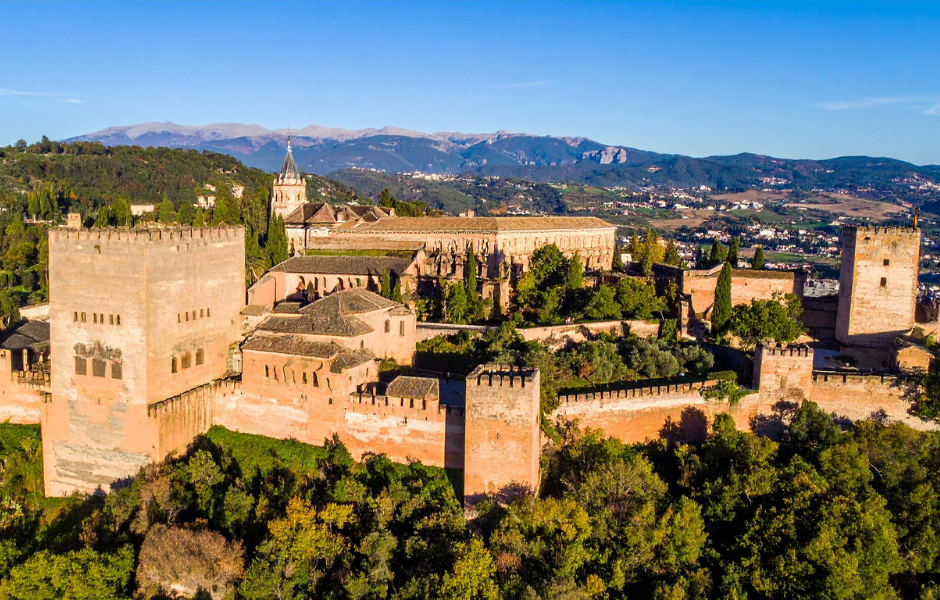
High above the Spanish city of Granada stands a large palace and fortress called the Alhambra. From a distance, its walls look strong and simple, built to protect the people inside. Step closer, and the Alhambra begins to reveal its secrets.
Behind the stone walls are quiet courtyards, flowing water, and detailed patterns carved into plaster and wood. The Alhambra is not just one building. It is a whole group of palaces, gardens, and towers built on a hill.
Who built the Alhambra?
The Alhambra was built mainly by Muslim rulers called the Nasrids more than 700 years ago. At that time, Granada was part of a Muslim kingdom in southern Spain known as Al-Andalus.
The Nasrid rulers wanted the Alhambra to be both beautiful and safe. Thick walls and watchtowers protected the palace, while inside there were peaceful spaces designed for thinking, resting, and meeting guests.
Walking through the Alhambra
Walking through the Alhambra feels calm and quiet, even though it is very popular with visitors today. Water flows gently through long pools and small fountains. The water was important, as it helped keep the palace cool during hot summers.
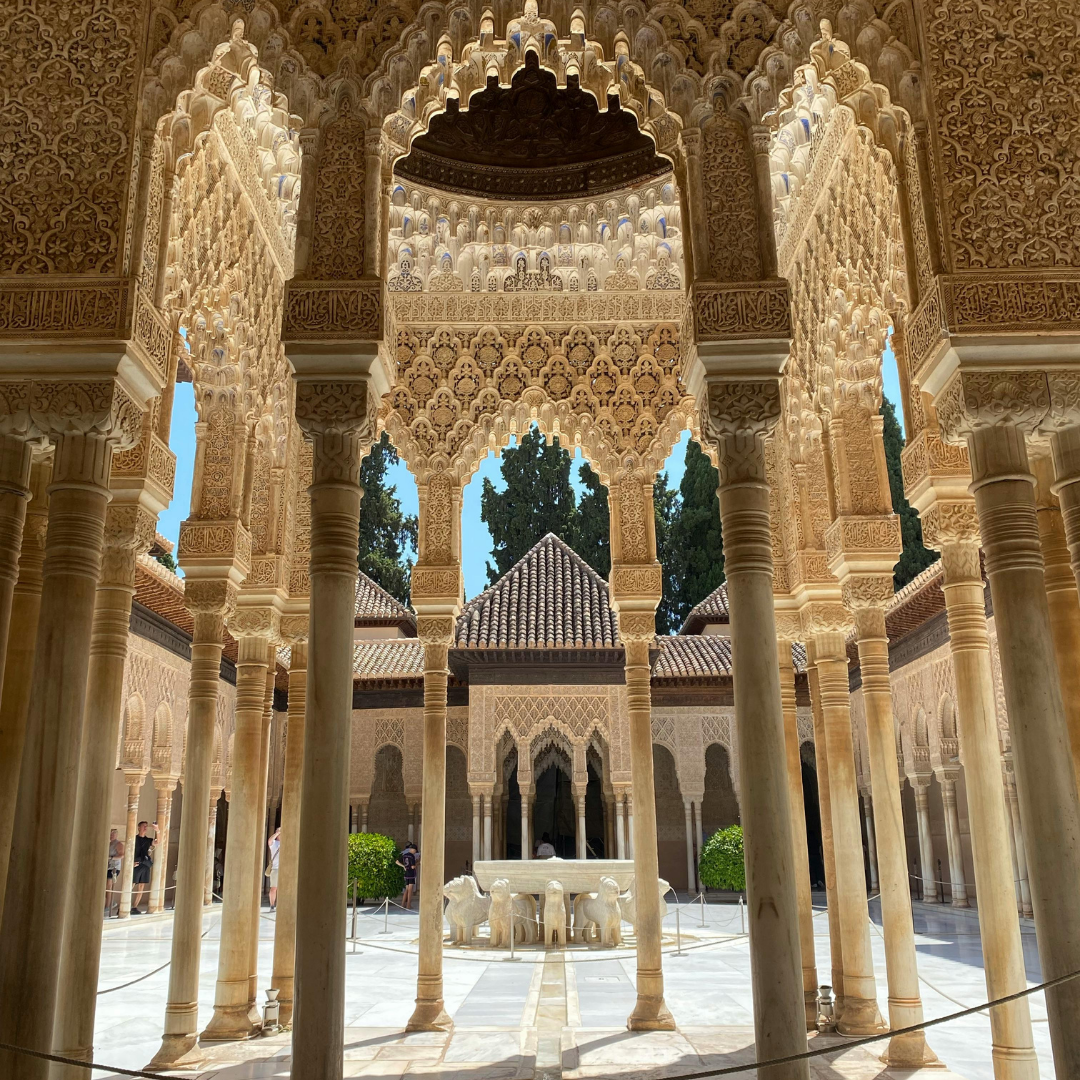
One of the most famous areas is the Court of the Lions. In the centre stands a fountain held up by twelve stone lions. The courtyard is surrounded by slender columns and decorated walls covered in patterns and writing.
Everywhere you look, there are shapes, symbols, and words carved into the walls. Many of these designs repeat again and again, creating a feeling of balance and order.
Walking through the Alhambra
Walking through the Alhambra feels calm and quiet, even though it is very popular with visitors today. Water flows gently through long pools and small fountains. The water was important, as it helped keep the palace cool during hot summers.
One of the most famous areas is the Court of the Lions. In the centre stands a fountain held up by twelve stone lions. The courtyard is surrounded by slender columns and decorated walls covered in patterns and writing.
Everywhere you look, there are shapes, symbols, and words carved into the walls. Many of these designs repeat again and again, creating a feeling of balance and order.
The gardens and views
There are also gardens filled with trees, flowers, and paths. From the Alhambra, visitors can look down over Granada and across to the mountains beyond. The views remind people why this hill was chosen so carefully.
Gardens were an important part of palace life. They offered shade, fresh air, and a place to escape the heat of the city below.
Why the Alhambra still matters
After Christian rulers took control of Granada in 1492, the Alhambra continued to be used and changed over time. Some parts were damaged, while others were repaired and protected.
Today, the Alhambra is a UNESCO World Heritage Site and one of Spain’s most visited historic places. Historians and archaeologists study it to learn about life in medieval Spain and how different cultures have shaped the country’s history.
You can learn more about the Alhambra on the UNESCO World Heritage website.
Article vocabulary list
- Palace: A large and impressive building where rulers once lived.
- Fortress: A strong building designed to protect people from attack.
- Ruler: A person who controls or leads a country or kingdom.
- Courtyard: An open space surrounded by walls or buildings.
- Fountain: A structure that sends water into the air or into a pool.
- Pattern: A design that repeats in a regular way.
- Garden: An area where plants, trees, or flowers are grown for beauty or food.
Comprehension questions
Just click the plus (+) to see the answer
1. Where is the Alhambra located?
a) In northern France
b) In southern Italy
c) In Granada, Spain
Answer: c) In Granada, Spain
2. Who built most of the Alhambra?
a) Roman soldiers
b) Spanish kings
c) Muslim rulers called the Nasrids
Answer: c) Muslim rulers called the Nasrids
3. Why were thick walls and towers important at the Alhambra?
a) They kept the palace cool
b) They made the palace look taller
c) They helped protect the people inside
Answer: c) They helped protect the people inside
4. What is special about the Court of the Lions?
a) It has a large market
b) It contains a fountain supported by stone lions
c) It is the tallest tower
Answer: b) It contains a fountain supported by stone lions
5. Why was water important in the Alhambra?
a) It was used for farming
b) It helped keep the palace cool and calm
c) It was only decorative
Answer: b) It helped keep the palace cool and calm
6. Why do people still study the Alhambra today?
a) It is a modern building
b) It shows how different cultures shaped Spain’s history
c) It is the oldest palace in Europe
Answer: b) It shows how different cultures shaped Spain’s history

Sinead is a writer and EFL teacher with eight years’ experience. She’s a native English speaker who loves making news stories fun and easy to understand for children around the world. Her passions include travel, animals, and helping to make the world a kinder, more sustainable place.