This children’s article,Why does the world turn green? St. Patrick’s Day explained for kids, has been written for native English speakers and learners of English as a second or foreign language. It can help children practise reading and comprehension, learn useful vocabulary, and explore the history and traditions of this famous Irish celebration. Readers will discover who St. Patrick was, why the colour green is everywhere, and how people celebrate around the world.
Celebrating St. Patrick’s Day
Every year on March 17th, streets in many cities around the world turn bright green. People wear green hats, wave Irish flags, and watch colourful parades. Some buildings are even lit up with green lights.
These celebrations are part of St. Patrick’s Day, a festival that began in Ireland and is now celebrated in many parts of the world.
The day is named after St. Patrick, who lived more than 1,500 years ago. He is known as the patron saint of Ireland and is remembered for helping spread Christianity across the island.
Who was St. Patrick?
St. Patrick was not originally from Ireland. Historians believe he was born in Britain during the late 300s. When he was a teenager, he was taken to Ireland and forced to work as a shepherd.
After several years, he escaped and returned home. Later in his life, he chose to go back to Ireland as a Christian missionary. His goal was to teach people about Christianity.
Over time, stories about St. Patrick became an important part of Irish history and culture.
You can learn more about the history of the holiday at Britannica – St Patrick’s Day.
Why is everything green?
Green has become the colour most closely linked with St. Patrick’s Day. Ireland is sometimes called the “Emerald Isle” because of its green countryside.
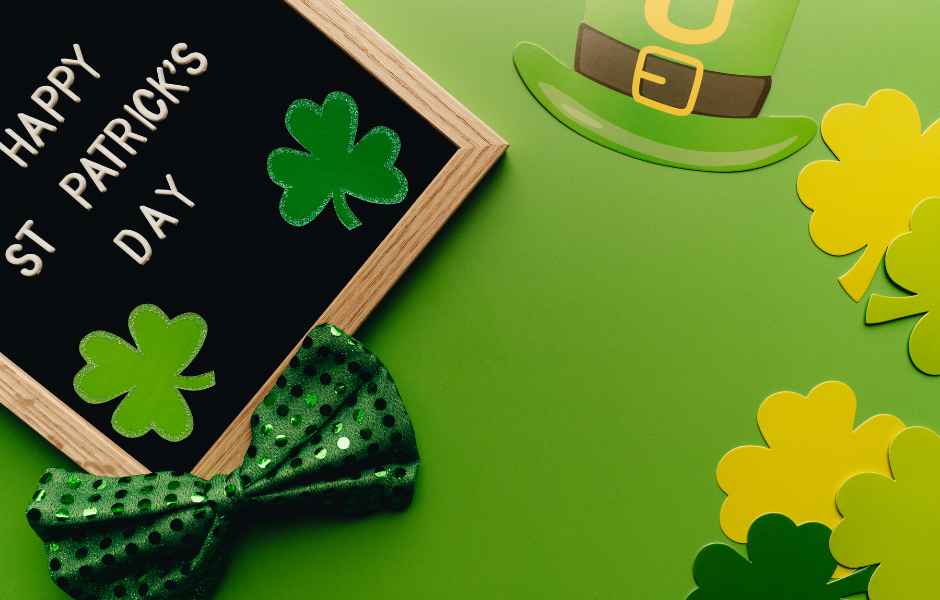
Another symbol of the holiday is the shamrock, a small three-leaf plant. According to tradition, St. Patrick used the shamrock to explain an idea from Christianity about the Holy Trinity.
Today, many people wear green clothes or decorate with shamrocks to celebrate the holiday.
Parades, music, and Irish culture
In Ireland, St. Patrick’s Day is a national celebration, and cities all around the country hold large parades with music, dancing, and colourful costumes.
The festival is also widely celebrated in other countries. Cities like New York, Chicago, Sydney, and Buenos Aires hold parades and events that celebrate Irish culture.
Some families enjoy traditional Irish foods, music, and dancing. Others simply take part in the fun by wearing green and watching the celebrations.
A celebration around the world
Millions of people with Irish roots live in different countries, which helped spread St. Patrick’s Day traditions around the world.
Today, the holiday is a chance for many people to learn about Irish culture, history, and traditions.

Article vocabulary list
- Patron saint: A saint who is believed to protect or represent a country, place, or group of people.
- Missionary: A person who travels to teach others about a religion.
- Shamrock: A small three-leaf plant that is a symbol of Ireland.
- Tradition: A custom or activity that people have followed for many years.
- Parade: A public celebration where people march or perform through the streets.
- Heritage: The culture, traditions, and history passed down through families or communities.
- Symbol: Something that represents an idea or meaning.
Comprehension questions
Just click the plus (+) to see the answer
1. Who is St. Patrick remembered as in Ireland?
a) A king
b) A patron saint
c) A soldier
Answer: b) A patron saint
2. What colour is most associated with St. Patrick’s Day?
a) Blue
b) Red
c) Green
Answer: c) Green
3. What small plant is a symbol of the holiday?
a) Shamrock
b) Rose
c) Sunflower
Answer: a) Shamrock
4. Where was St. Patrick believed to be born?
a) Ireland
b) Britain
c) Spain
Answer: b) Britain
5. What kind of events often take place on St. Patrick’s Day?
a) Parades and celebrations
b) Sports tournaments
c) Firework shows
Answer: a) Parades and celebrations
6. Why is St. Patrick’s Day celebrated in many countries today?
a) Because people around the world share Irish heritage
b) Because it marks the start of summer
c) Because it is a school holiday everywhere
Answer: a) Because people around the world share Irish heritage

Sinead is a writer and EFL teacher with eight years’ experience. She’s a native English speaker who loves making news stories fun and easy to understand for children around the world. Her passions include travel, animals, and helping to make the world a kinder, more sustainable place.