This children’s article, How the World’s Fastest Animal Catches Its Prey: The Life of a Peregrine Falcon, has been written for native English speakers and learners of English as a second or foreign language. It can help children build vocabulary, learn about peregrine falcons, and discover how these amazing birds reach incredible speeds. Written by Mark Pulley, a teacher and writer who creates fun and informative news articles for English learners.
Meet the fastest animal on Earth
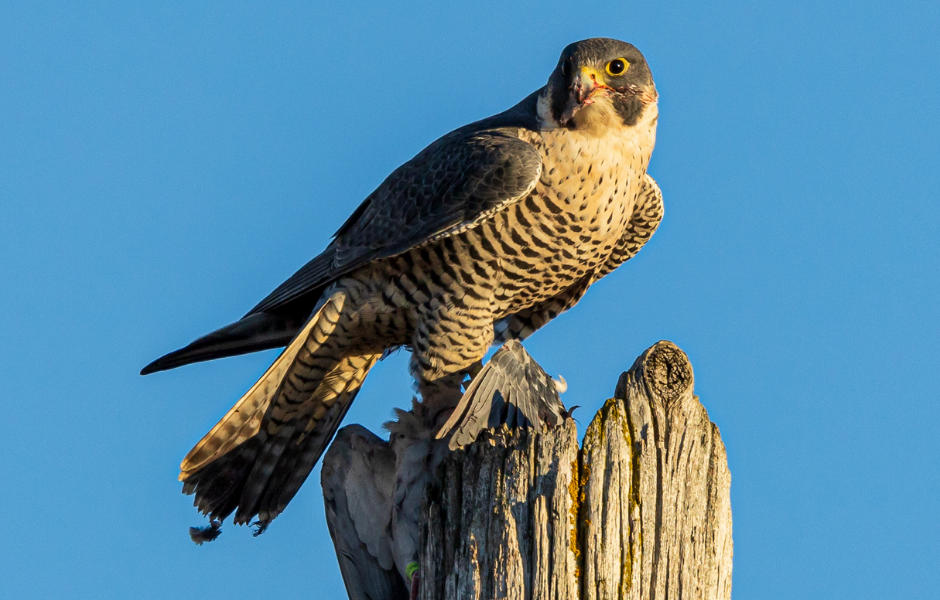
The peregrine falcon is a bird of prey with a superpower: superspeed. Although cheetahs are fast on land, peregrine falcons are the fastest animals in the world. When they dive through the air to catch prey, they can reach more than 320 kilometres per hour. That’s faster than most race cars.
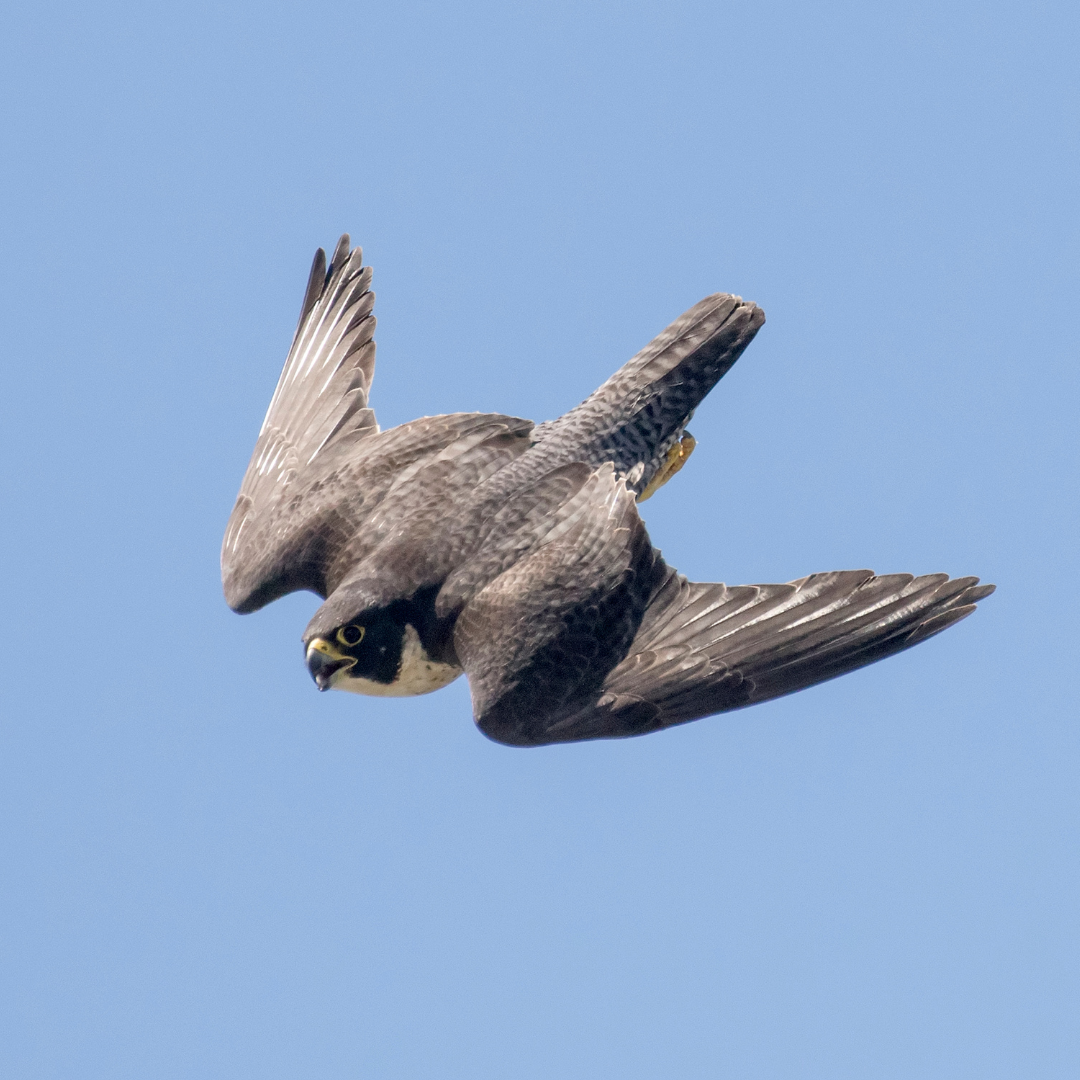
Their speed comes from their long, pointed wings, strong chest muscles, and a special diving technique called a stoop. During a stoop, they tuck in their wings and drop like a rocket towards their target.
Homes in surprising places
Peregrine falcons live on every continent except Antarctica. They usually nest on high cliffs, but they also love tall buildings, bridges, and towers in big cities. A skyscraper can feel just like a mountain ledge, so many falcons live right above busy streets.
Because they are adaptable, peregrine falcons can survive in deserts, cities, forests, and even icy coastlines. They usually live alone or in pairs.
What they eat and how they hunt
Peregrine falcons mainly eat other birds, including pigeons, ducks, and small songbirds. Their hunting style is one of the most dramatic in nature. First, they circle high in the sky and spot a target using their excellent eyesight. Then they begin their stoop, the famous high-speed dive.
As they fall, they keep their bodies streamlined and use small feathers to control direction. At the perfect moment, they strike their prey with sharp talons. The speed of the hit is so powerful that it often knocks the other bird out of the air instantly.
Life cycle and lifespan
Young peregrine falcons learn to fly at about six weeks old. They spend the first year practising their hunting skills before becoming expert flyers. In the wild, peregrine falcons usually live for around 13 to 15 years, although some live longer.
From endangered to a great comeback
Around the mid-1900s, peregrine falcons nearly disappeared from parts of the world because of harmful chemicals used on crops. These chemicals made their eggs too weak to survive. Conservationists stepped in, protecting the birds and banning the chemicals.
Today, the peregrine falcon is no longer considered endangered in many countries. Their recovery is seen as one of the greatest wildlife success stories ever.
Article vocabulary list
- Prey: An animal that is hunted by another animal.
- Stoop: A fast diving attack made by a bird of prey.
- Adaptable: Able to change and survive in different environments.
- Talons: The sharp claws of a bird of prey.
- Streamlined: Shaped to move through air or water easily.
- Conservationist: A person who works to protect nature and wildlife.
- Ledge: A flat, narrow surface on a cliff or building.
- Skyscraper: A very tall building found in cities.
Comprehension questions
Just click the plus (+) to see the answer
1. What makes peregrine falcons the fastest animals in the world?
A) Their powerful running legs
B) Their diving technique called a stoop
C) Their ability to swim quickly
Answer: B) Their diving technique called a stoop
2. Where do peregrine falcons often live in big cities?
A) Underground tunnels
B) Tall buildings and bridges
C) Parks and gardens
Answer: B) Tall buildings and bridges
3. What do peregrine falcons mainly eat?
A) Frogs and beetles
B) Fruit and nuts
C) Other birds
Answer: C) Other birds
4. Why did peregrine falcons become endangered in the past?
A) They forgot how to hunt
B) Harmful chemicals weakened their eggs
C) They all moved to new continents
Answer: B) Harmful chemicals weakened their eggs
5. How fast can peregrine falcons dive?
A) 320 kilometres per hour
B) 40,000 kilometres per hour
C) 10 kilometres per hour
Answer: A) 320 kilometres per hour

Mark is a writer and EFL teacher from England with eight years’ experience. He’s passionate about travel, sport (especially football), animals, nature, and history, and enjoys helping children explore the world through language and learning.