This children’s article, Petra, Jordan’s ancient city carved into rock, has been written for native English speakers and learners of English as a second or foreign language. It can help children practise reading and comprehension, learn useful history and geography vocabulary, and imagine what it is like to explore one of the most famous ancient cities in the world. Written by Sinead O’Carroll, an experienced teacher and writer.
A city hidden in the desert
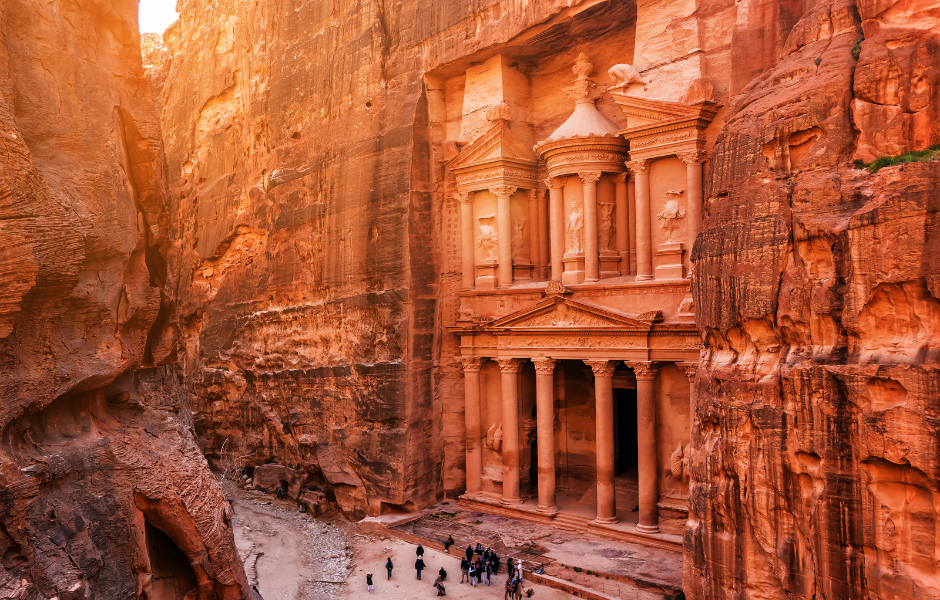
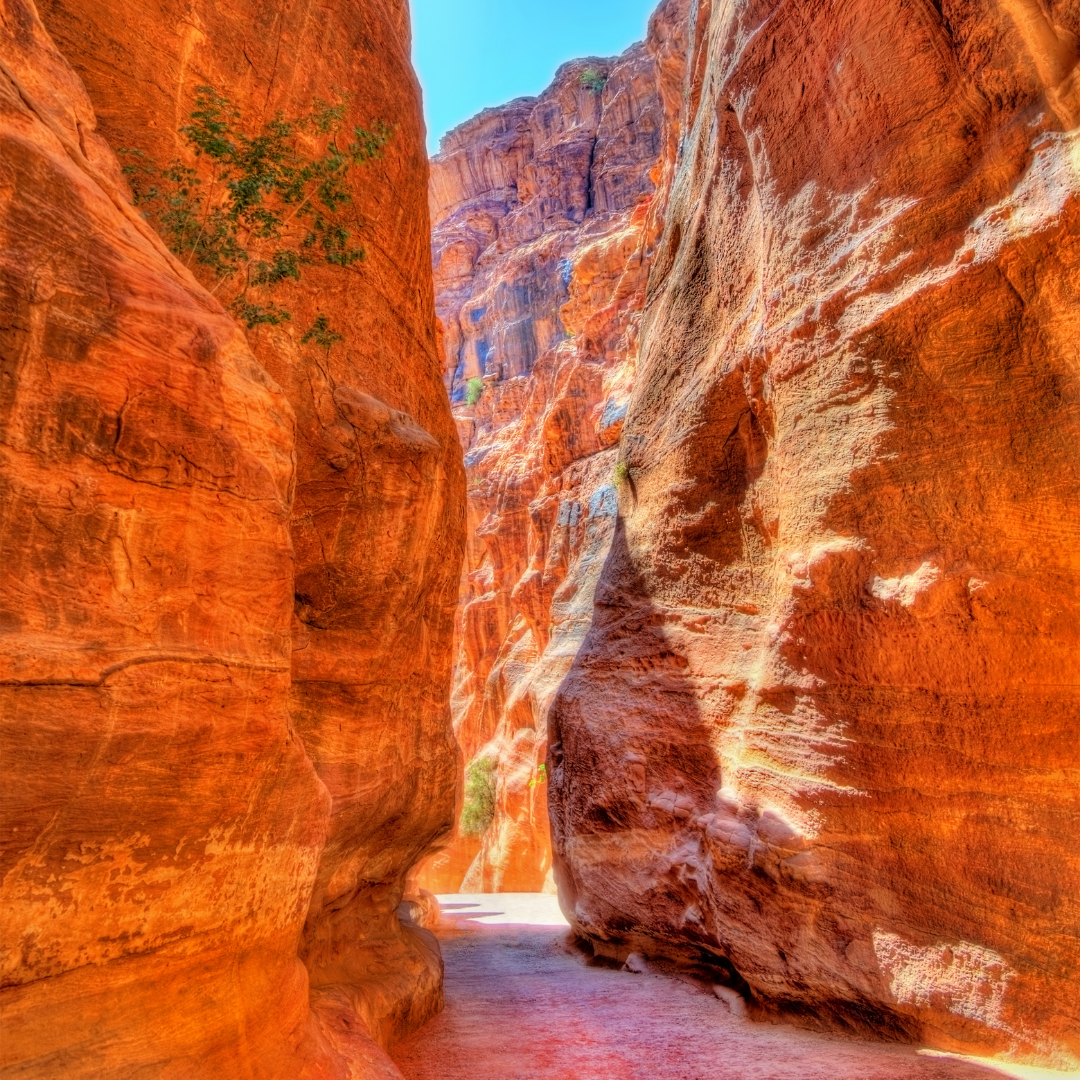
Imagine walking through a desert where the rocks glow red, pink, and orange in the sunlight. At first, all you can see are tall stone walls and a narrow path ahead. Then the canyon opens, and a huge building appears, carved straight into the rock face.
This is Petra, an ancient city in southern Jordan. Petra looks magical today, but long ago it was a busy place filled with travellers, traders, and camels carrying goods across the desert.
Who built Petra?
Petra was built more than 2,000 years ago by a group of people called the Nabataeans. They were traders who travelled along desert routes, selling spices, silk, and other valuable items. Petra became an important stop where people could rest, trade, and refill their water supplies.
Living in the desert was not easy. The Nabataeans solved this problem by carving channels and tunnels into the rock to collect rainwater. This clever system helped Petra survive in a very dry place.
Entering the city
Most visitors enter Petra through a narrow canyon called the Siq. The path twists between tall rock walls that block out the sun. Footsteps echo as people walk forward, unsure of what they will see next.
At the end of the Siq stands Petra’s most famous building, the Treasury. It rises out of the rock like a giant stone puzzle, with columns, carvings, and details shaped by hand. Many visitors stop and stare when they see it for the first time.
Exploring Petra’s buildings
Petra is much bigger than the Treasury. Hidden across the valley are hundreds of tombs, stairways, and temples carved into the cliffs. One of the largest buildings is the Monastery, which sits high above the city and can only be reached by climbing many stone steps.
Walking through Petra feels like stepping back in time. Wind, sand, and sunlight have slowly shaped the city over centuries, changing its colours throughout the day.
Why Petra still matters
Petra is one of the New Seven Wonders of the World and is protected as a UNESCO World Heritage Site. Archaeologists study Petra to learn how ancient people adapted to desert life and built a city that lasted for centuries.Petra was forgotten by much of the world for a long time after trade routes changed. When it was rediscovered in 1812, people were amazed that an entire city had been hiding in the rocks. Today, Petra reminds us that history can sometimes be found in the most unexpected places.
You can learn more about Petra on the UNESCO World Heritage website.
Article vocabulary list
- Ancient: From a very long time ago.
- Desert: A very dry place with little rain.
- Carved: Cut or shaped into stone or another hard surface.
- Trader: A person who buys and sells goods.
- Canyon: A deep, narrow valley with steep rock sides.
- Tomb: A place where people are buried.
- Archaeologist: A scientist who studies the past by examining old objects and buildings.
Comprehension questions
Just click the plus (+) to see the answer
1. Where is Petra located?
a) In northern Egypt
b) In southern Turkey
c) In southern Jordan
Answer: c) In southern Jordan
2. Who built the city of Petra?
a) The Romans
b) The Egyptians
c) The Nabataeans
Answer: c) The Nabataeans
3. Why was Petra an important place for traders?
a) It was near the sea
b) It was a stopping place on desert trade routes
c) It had forests and rivers
Answer: b) It was a stopping place on desert trade routes
4. What is the Siq?
a) A stone bridge
b) A market square
c) A narrow canyon leading into Petra
Answer: c) A narrow canyon leading into Petra
5. What do visitors usually see first at the end of the Siq?
a) The Monastery
b) A desert camp
c) The Treasury
Answer: c) The Treasury
6. Why was Petra forgotten for many years?
a) An earthquake destroyed it
b) Trade routes changed
c) The desert covered it with sand
Answer: b) Trade routes changed

Sinead is a writer and EFL teacher with eight years’ experience. She’s a native English speaker who loves making news stories fun and easy to understand for children around the world. Her passions include travel, animals, and helping to make the world a kinder, more sustainable place.