This children’s article, Curling explained: The Winter Olympic sport of sweeping and sliding, has been written for native English speakers and learners of English as a second or foreign language. It can help children practise reading and comprehension, learn useful vocabulary, and understand one of the most unusual and tactical sports at the Winter Olympics. Written by Mark Pulley, a teacher and writer who creates fun and informative news articles for English learners.
What is curling?
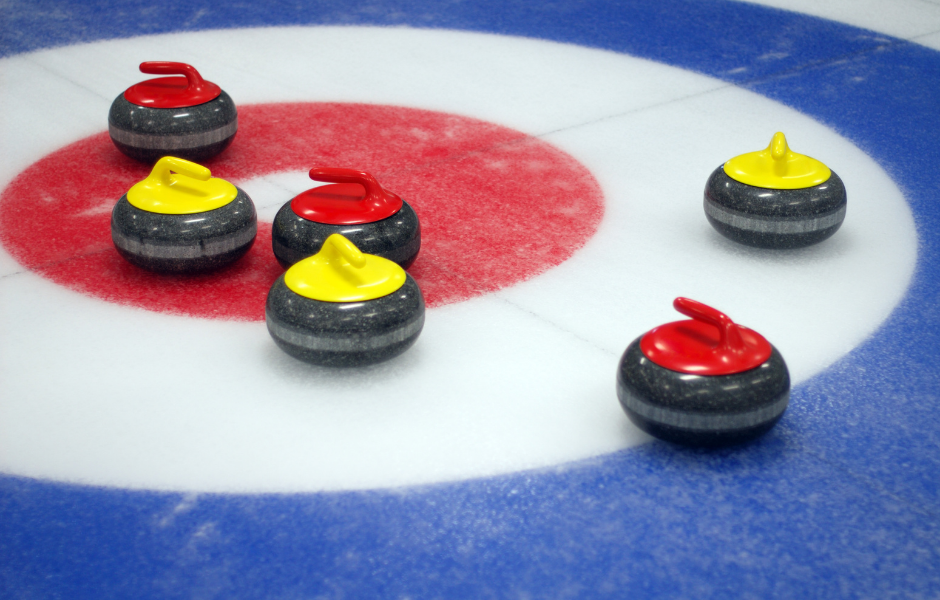
Curling is a team sport played on ice. Players slide heavy, round stones towards a target called the “house”, which is painted like a giant bullseye on the ice.
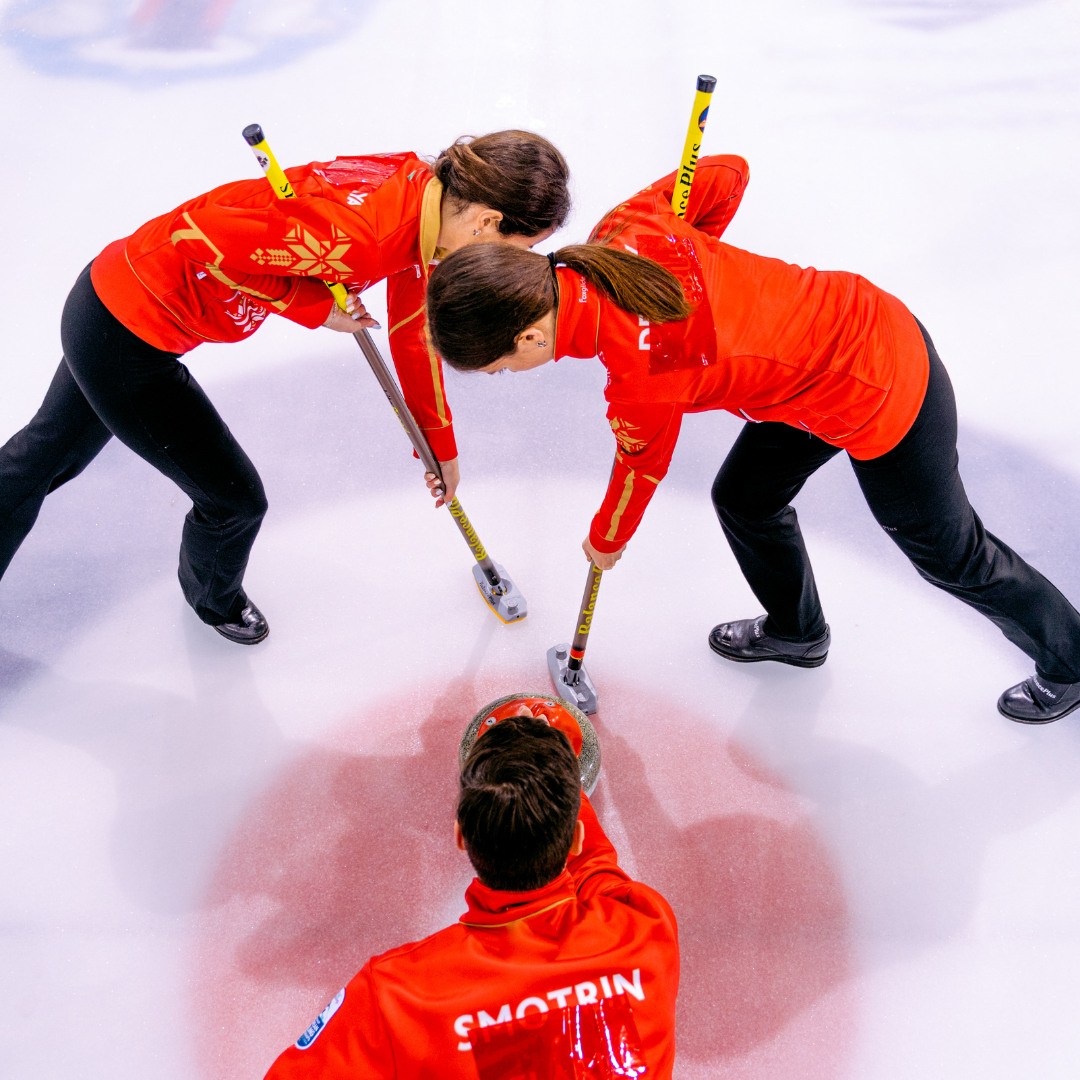
Each team has four players (except in the mixed doubles when it’s only two). One player slides the stone, while two teammates sweep the ice in front of it using special brushes. The sweeping helps the stone travel further and stay straighter. The team captain, called the skip, decides where each stone should go.
A match is divided into sections called ends. In each end, both teams slide eight stones. After all 16 stones have been played, the team with the stone closest to the centre of the house scores points.
What are the rules?
Curling is sometimes compared to chess on ice. Teams must think carefully about every shot. They can try to knock the other team’s stones away, block the path to the target, or gently place a stone in a perfect position.
Players must release the stone before a line marked on the ice. If they cross it, the stone does not count. There are also rules about how many stones can be knocked out at the start of an end, which makes the game more tactical and fair.
Matches at the Olympics usually last about two hours. The team with the most points after all ends wins. If the score is tied, an extra end is played to decide the winner.
Curling at the Winter Olympics
Curling has Scottish roots and was first played in the 1500s. It appeared at the very first Winter Olympics in 1924, although it was not always included in the early years.
It became a permanent Olympic sport in 1998. Since then, it has grown in popularity. There are events for men, women and mixed doubles teams.
Some countries are especially strong in curling. Canada has won more Olympic gold medals in curling than any other country. Sweden and Great Britain are also very successful. Switzerland and Norway often reach the final stages too.
You can read more about Olympic curling on the official Olympic website.
Other major competitions
Besides the Winter Olympics, the biggest events in curling are the World Curling Championships and the European Curling Championships. These two competitions take place every year and feature the best teams from around the world.
In Canada, curling is extremely popular. Large crowds watch national tournaments such as the Brier for men and the Scotties Tournament of Hearts for women. Winning these events is a huge honour.
Curling may look calm and quiet, but it requires strength, balance and teamwork. The stones weigh about 20 kilograms, and players must be very accurate. A small mistake can change the whole match.
Article vocabulary list
- End: A section of a curling match where each team plays all of its stones.
- House: The circular target area on the ice.
- Skip: The captain of a curling team who decides the tactics.
- Tactical: Carefully planned to gain an advantage.
- Permanent: Lasting or continuing without stopping.
- Championship: A major competition to decide the best team or player.
- Mixed doubles: A team made up of one man and one woman.
Comprehension questions
Just click the plus (+) to see the answer
1. What is the “house” in curling?
a) The changing room
b) The team bench
c) The target on the ice
Answer: c) The target on the ice
2. What is an “end” in curling?
a) The final whistle
b) A section of the match
c) A type of brush
Answer: b) A section of the match
3. Which country has won the most Olympic gold medals in curling?
a) Canada
b) Italy
c) Japan
Answer: a) Canada
4. What happens if the score is tied after all ends?
a) The match ends in a draw
b) The team with the last stone wins
c) An extra end is played
Answer: c) An extra end is played
5. What do players use to help the stone travel further and straighter?
a) Skates
b) Brushes
c) Helmets
Answer: b) Brushes

Mark is a writer and EFL teacher from England with eight years’ experience. He’s passionate about travel, sport (especially football), animals, nature, and history, and enjoys helping children explore the world through language and learning.