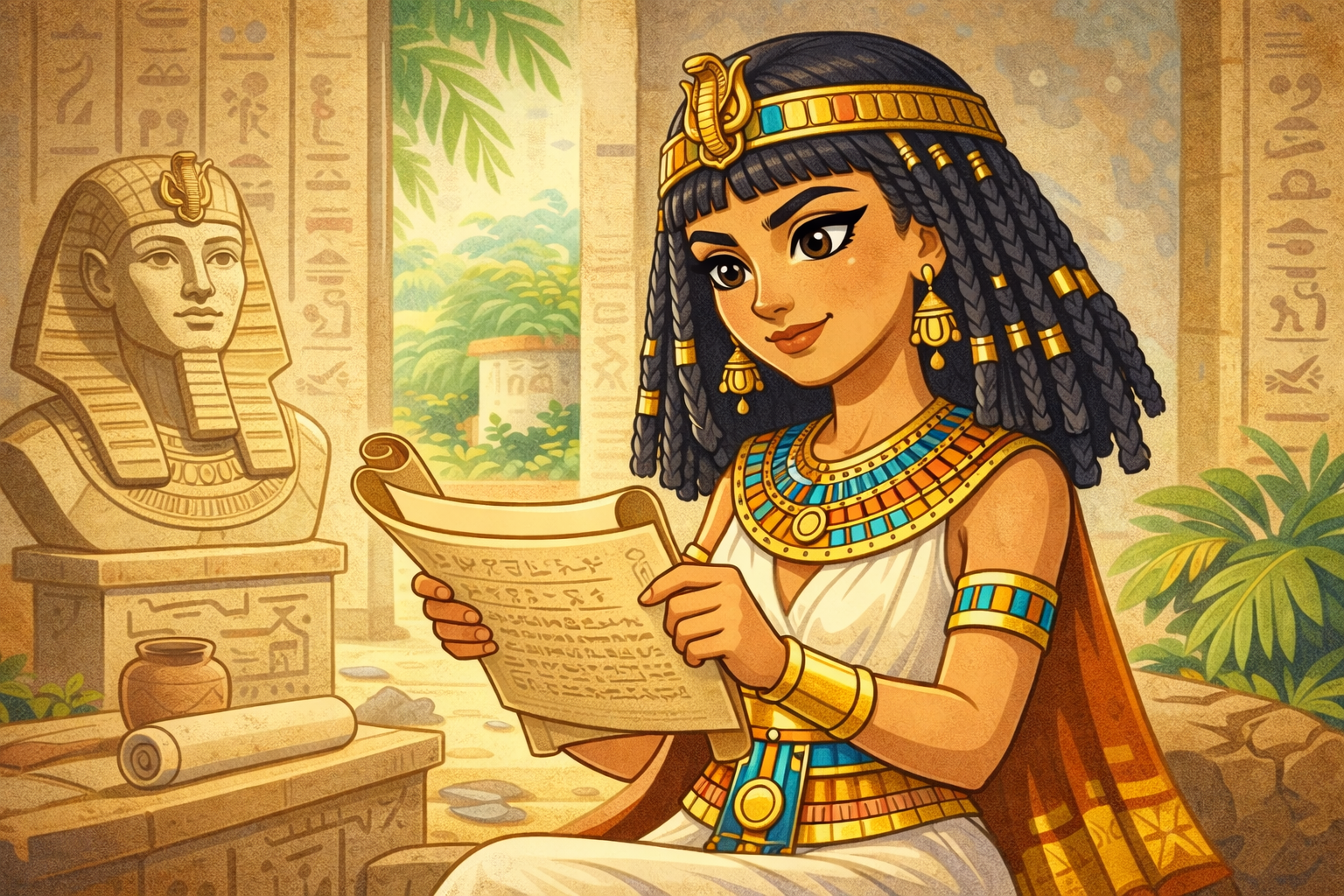
This children’s article, Cleopatra explained for kids: the story of the Queen of Egypt, has been written for native English speakers and learners of English as a second or foreign language. It can help children practise reading and comprehension, learn useful vocabulary, and explore the life of one of the most famous rulers in history by separating popular myths from real historical facts. Written by Sinead O’Carroll, an experienced English teacher and writer.
A famous name from ancient history
Cleopatra is one of the most famous figures from ancient history. Her name often appears in films, books, and stories, where she is shown as glamorous and mysterious. Many people know her face, yet fewer know what her life was really like.
Cleopatra lived more than 2,000 years ago and ruled Egypt during a time of great change. She was not only a queen, but also a powerful political leader.
Cleopatra was a ruler, not just a legend
Cleopatra became queen of Egypt in 51 BCE when she was still a teenager. She ruled during a difficult period, when Egypt faced pressure from the growing power of Rome. Staying in control required intelligence, confidence, and careful decision-making.
Cleopatra was known for her sharp mind. She spoke several languages and was highly educated, which helped her communicate with leaders from different regions. These skills were important in a world where alliances could decide the future of a kingdom.
Myths and misunderstandings
Many stories focus on Cleopatra’s beauty, but ancient writers often exaggerated this part of her life. Historical evidence suggests that her influence came more from her intelligence and leadership than from her appearance.
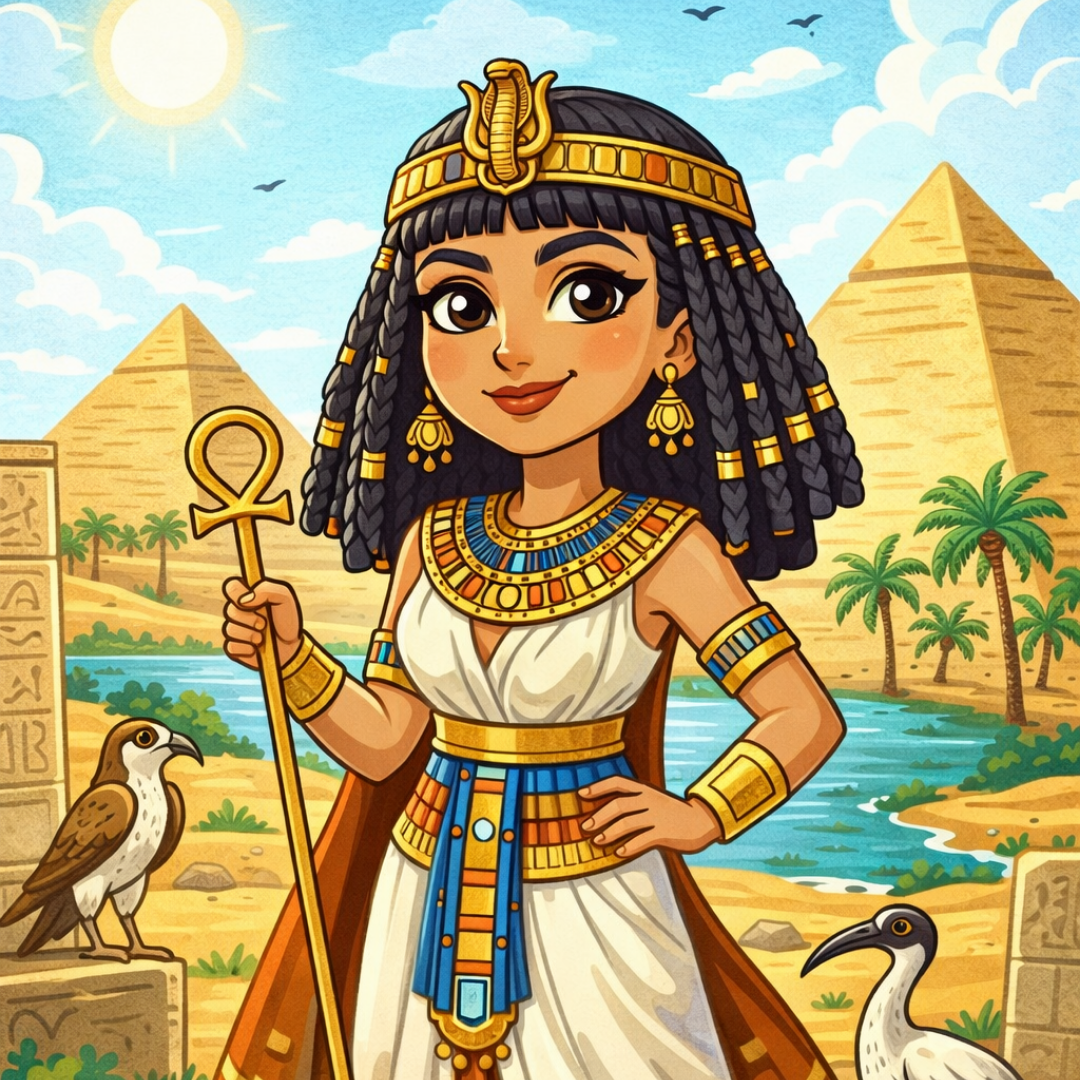
Cleopatra understood how to present herself as a strong ruler. She used symbols, ceremonies, and public appearances to show her power and connection to Egyptian traditions. This helped her gain support from her people.
Cleopatra and the Roman world
Cleopatra is often linked with famous Roman leaders such as Julius Caesar and Mark Antony. These relationships were also political partnerships, designed to protect Egypt from becoming fully controlled by Rome.
Despite her efforts, Egypt eventually became part of the Roman Empire after her death. Cleopatra died in 30 BCE, marking the end of ancient Egypt as an independent kingdom.
Why Cleopatra still matters
Cleopatra remains important today because her life challenges simple stories about history. She shows that women held power in the ancient world and played key roles in politics and leadership.
Her story also reminds us to question myths and look closely at evidence. By doing so, history becomes richer and more interesting.To learn more about Cleopatra from a trusted source, you can visit Encyclopaedia Britannica.
Article vocabulary list
- Ruler: A person who leads or controls a country.
- Ancient: From a very long time ago.
- Alliance: A partnership between people or countries.
- Evidence: Facts or information that show something is true.
- Empire: A group of countries ruled by one power.
- Legend: A story that may mix fact and imagination.
- Political: Related to leadership and government.
- Independent: Free from control by others.
Comprehension questions
Just click the plus (+) to see the answer
1. Who was Cleopatra?
a) A Roman soldier
b) A queen of Egypt
c) A Greek writer
Answer: b) A queen of Egypt
2. How old was Cleopatra when she became queen?
a) In her twenties
b) As a child
c) As a teenager
Answer: c) As a teenager
3. What was Cleopatra especially known for?
a) Her intelligence and leadership
b) Her paintings
c) Her inventions
Answer: a) Her intelligence and leadership
4. Why were Cleopatra’s relationships with Roman leaders important?
a) They were only personal
b) They helped protect Egypt politically
c) They were part of Roman law
Answer: b) They helped protect Egypt politically
5. What happened to Egypt after Cleopatra’s death?
a) It became part of the Roman Empire
b) It became a democracy
c) It joined another African kingdom
Answer: a) It became part of the Roman Empire
6. What does Cleopatra’s story encourage people to do?
a) Believe every legend
b) Ignore ancient history
c) Question myths and look at evidence
Answer: c) Question myths and look at evidence

Sinead is a writer and EFL teacher with eight years’ experience. She’s a native English speaker who loves making news stories fun and easy to understand for children around the world. Her passions include travel, animals, and helping to make the world a kinder, more sustainable place.