This children’s article, Vatican City: A kids’ guide to the world’s smallest country, has been written for native English speakers and learners of English as a second or foreign language. It can help children build vocabulary, learn about one of the most unusual places on Earth, and discover how a tiny area can still be very important. Written by Mark Pulley, a teacher and writer who creates fun and informative news articles for English learners.
How can such a tiny place be a country?
Vatican City is the smallest country in the world. You can walk around the whole place in about 40 minutes! It sits inside the city of Rome, Italy, but it is not part of Italy. Instead, it is a completely separate country with its own rules, leader, and even its own football team.
To be a country, a place needs its own government, laws, and borders, and Vatican City has all of these. It became an independent country in 1929 under a special agreement known as the Lateran Treaty. This treaty said that the Pope, the leader of the Roman Catholic Church, could have his own independent state.
Because of this, Vatican City is known as a “city-state” and has its own passports, police force, and stamps. Only about 800 people live there, and most of them work for the Church.
A long and fascinating history
Long before it became a country, this area was important to Christians. It is believed to be the burial place of Saint Peter, one of Jesus’ 12 disciples. Over time, churches were built here, and the Popes began to live and work in the area.
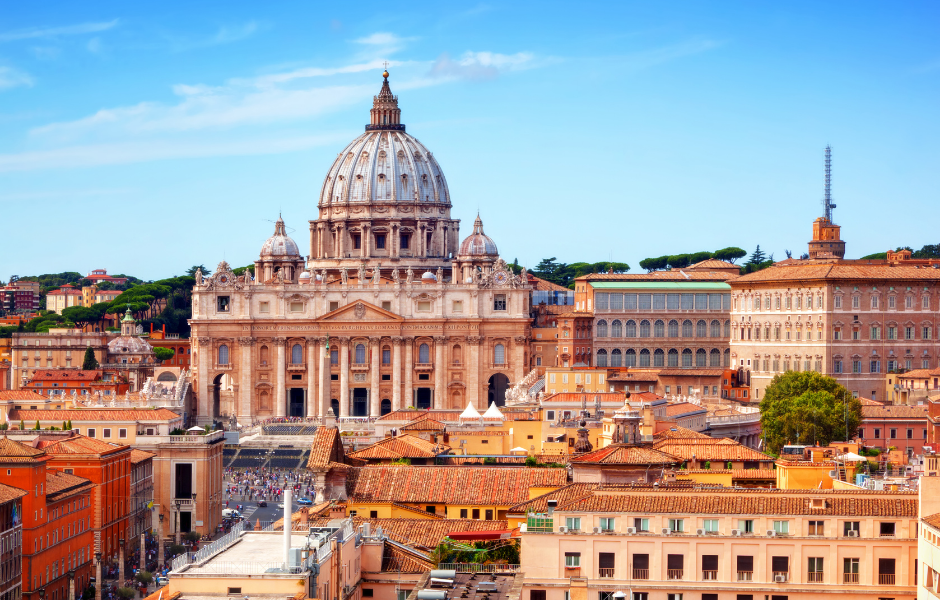
The huge St Peter’s Basilica that stands there today took more than 100 years to build. Famous artists such as Michelangelo worked on it, and he also painted the ceiling of the Sistine Chapel nearby. Millions of visitors come every year to admire these incredible buildings and artworks.
What makes Vatican City special today?
Even though it is tiny, Vatican City has a big role in the world. It is the home of the Pope, who leads more than a billion Catholics around the globe. It is also a place where important meetings and decisions regarding the Church are held.
Tourists come to see St Peter’s Square, the beautiful gardens, and the Vatican Museums, which contain some of the most famous paintings and sculptures in history. The country also has the Swiss Guard, a small army of soldiers in colourful uniforms who protect the Pope.
A tiny country with a huge impact
Vatican City may be small, but its influence reaches far beyond Rome. Its art, history, and traditions attract millions of people. Its religious importance is huge. And its unusual status as the world’s smallest independent country makes it a fascinating place to learn about.
To find out more about Vatican City and its famous buildings, you can visit the official museum website.

Article vocabulary list
- Independent – able to control itself without being ruled by another country.
- Treaty – a formal agreement between countries.
- City-state – a city that is also an independent country.
- Basilica – a large and important Christian church.
- Artwork – paintings or sculptures created by artists.
- Influence – the power to affect people or events.
- Tradition – a long-established custom or belief.
- Burial place – the location where someone is buried.
Comprehension questions
Just click the plus (+) to see the answer
1. What makes Vatican City a country?
A) It has beaches and mountains
B) It has its own government, laws, and borders
C) It has more than one million people
Answer: B) It has its own government, laws, and borders
2. When did Vatican City become independent?
A) 1929
B) 1829
C) 2001
Answer: A) 1929
3. Who painted the ceiling of the Sistine Chapel?
A) Michelangelo
B) Leonardo da Vinci
C) St Peter
Answer: A) Michelangelo
4. Approximately how many people live in Vatican City?
A) 800
B) 80,000
C) 8
Answer: A) 800
5. What is the role of the Swiss Guard?
A) To run the museums
B) To protect the Pope
C) To lead tourist groups
Answer: B) To protect the Pope

Mark is a writer and EFL teacher from England with eight years’ experience. He’s passionate about travel, sport (especially football), animals, nature, and history, and enjoys helping children explore the world through language and learning.